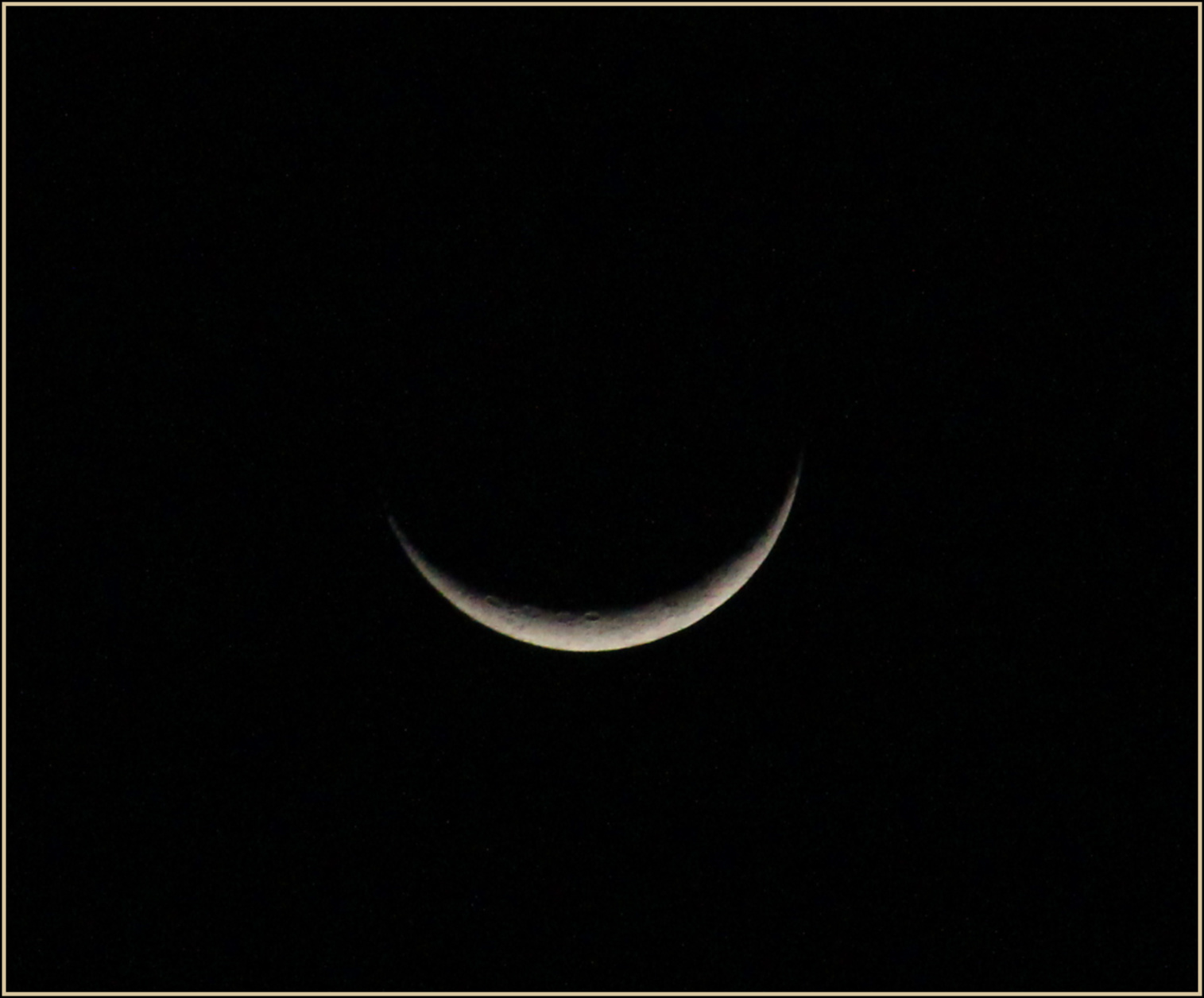
The March moon is rising higher each evening and getting wider, but a couple of days ago it was a thin, grinning apparition in the western sky after sunset. Notice that it is light brown in color, not silver or white? The crater near the center of the terminator (the dividing line between day and night on the moon) is named Langrenus and is spectacular at any illumination of the moon. To its left, three other similar sized craters can just barely be seen to complete what was once known as the “Western Chain.”
They were once thought to be evidence of volcanic origins of the lunar craters, however, further research and findings of the Apollo missions proved that the craters were due to explosions from the impacts of hypervelocity meteors and asteroids, not from volcanoes. Apollo also removed the term “Western Chain” from lunar vocabulary by relabeling this side of the moon as the eastern side to agree with earth-oriented maps. In the past the “west” side of the moon had been designated as the side of the moon closest to earth’s western horizon. Wow, was I confused when I started studying the moon’s features from old charts with the archaic directional convention!
Regardless of all the nonsense above, it is simply awe inspiring watching the thin moon add a sense of wonder to the evening sky, grinning like the proverbial Cheshire Cat without being catty.
 Eskildoodle Photos and Feelings